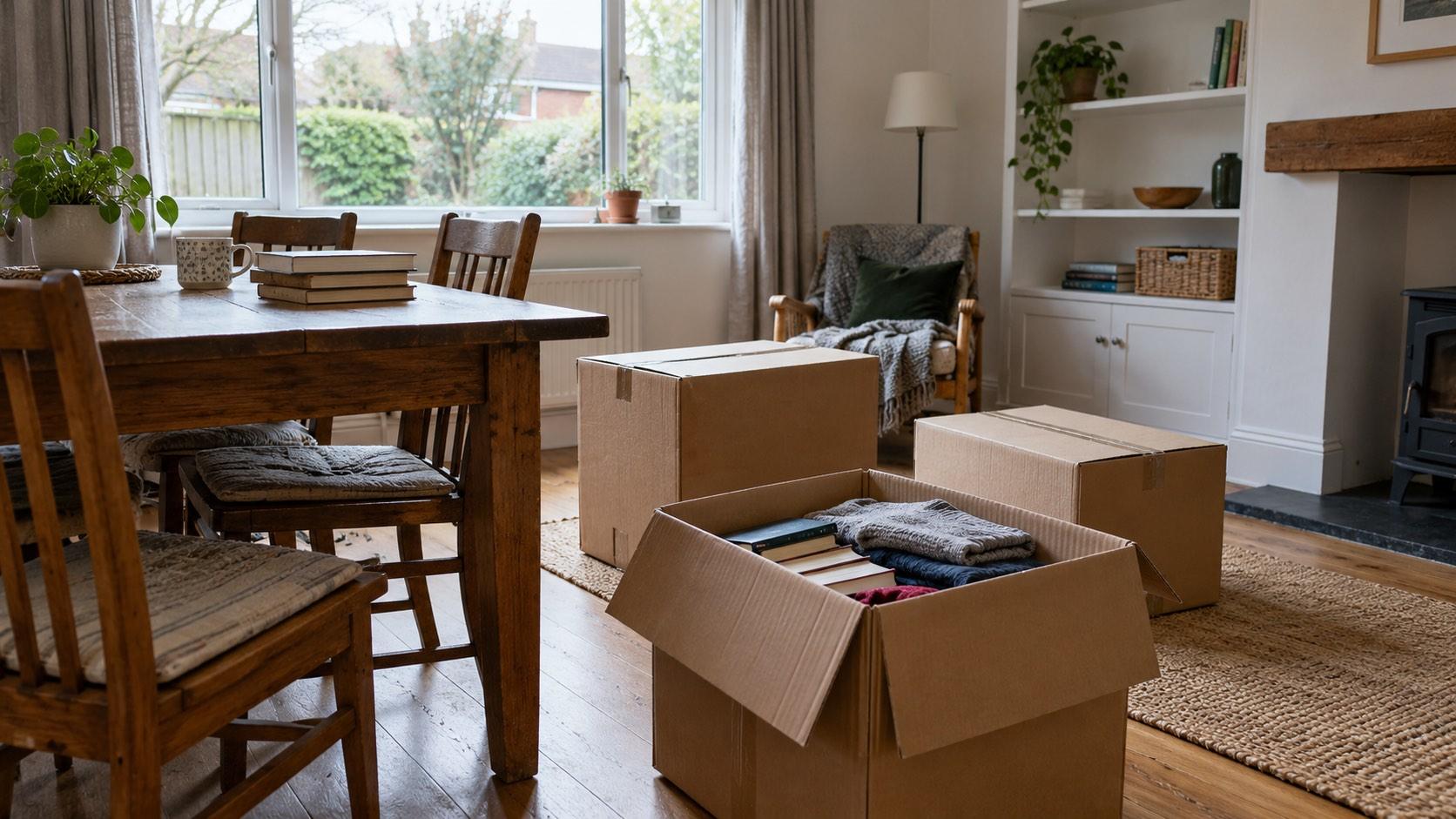
Almost everyone underestimates how much they own until they try to put it in boxes. The loft alone usually accounts for a weekend, and the garage often accounts for rather more than that.
The argument for dealing with it before a move rather than during one is simple. Anything you pack, you pay to transport, and then you unpack it in a house where you have to find somewhere to put it. Sorting first is less work than sorting twice.
Start earlier than feels necessary
Decluttering is not a single job and it does not respond well to being done in a weekend. Realistically it wants several weeks of an hour or two at a time, which is why starting when you first think about moving, rather than once a sale is agreed, makes the whole thing considerably easier.
It also has a useful side effect. A house with less in it photographs better, shows better and feels larger, so the work you do for the move helps the sale as well.
Room by room, not category by category
Working through the house room by room gives you a visible sense of progress, which matters when the job is long. Start with the easiest room rather than the worst one, because momentum is more useful than logic at the beginning.
In each room the question worth asking is not whether you might use something one day, but whether you have used it in the time you have lived here. Kitchens accumulate appliances bought with good intentions and used twice. Wardrobes hold clothes kept for a size or an occasion that has not arrived. Bookshelves fill with books nobody will read again. Bathrooms collect half used products with expiry dates long past.
Be more ruthless with the things that are easy to replace and more careful with the things that are not. Almost anything from a supermarket can be bought again. A tool, a piece of furniture that fits an awkward space, or anything with genuine sentimental weight deserves more thought.
The loft, the garage and the shed
These are where the real volume sits, so they are well worth tackling first while the weather is still kind. They usually take the longest, and they are the most likely to contain something that needs specialist disposal.
Lofts are best emptied entirely rather than sorted in place, because it is almost impossible to judge what is there while crouching under a rafter. Bring everything down, work through it on a floor where you can see it, and put back only what genuinely needs to go back, on the understanding that you will be taking it down again shortly.
Garages and sheds tend to hold paint, chemicals, garden products, old fuel and electrical items that cannot go in a household bin. Check what your local household waste recycling centre accepts before loading the car. In the county these are run by West Northamptonshire Council and North Northamptonshire Council depending on where you live, and both also operate bulky waste collections for larger items.
Furniture that will not suit the new house
Deciding early what furniture is coming with you makes moving day much easier. A sofa that fits a large through lounge may not go up the stairs of a Victorian terrace, let alone fit the room. Wardrobes built for a bedroom with high ceilings may not stand upright in a newer house. Curtains almost never fit the next set of windows.
If you have measurements for the new property, use them properly before moving day rather than discovering the problem with a removal team standing in the hall. Anything that clearly will not work is better sold or given away in advance, when you have time to find it a home, than dealt with in a hurry afterwards.
Selling furniture takes longer than people expect, so start early if you intend to. Local selling pages, auction houses for anything with real value, and charity shops that collect larger items are all worth considering. Several charities will collect furniture free of charge provided it has the correct fire safety labels, which is worth checking before arranging anything.
Paperwork
Moving is a good moment to deal with the filing that has accumulated, partly because you will need some of it. Deeds, guarantees, building regulations certificates, planning consents, boiler service records and window or electrical certificates will all be asked for during the conveyancing process, and having them together saves considerable time later.
Everything else can be reduced substantially. Old bank statements, expired insurance documents and utility bills from a previous decade can go, though anything containing personal details is worth shredding rather than binning. Keep tax records for as long as required and scan anything you want to retain but do not need in paper.
Sentimental things
The advice to be ruthless does not extend to everything. Photographs, letters, children’s drawings and family objects deserve a gentler approach, and happily they are usually small.
A sensible approach is to keep them but to contain them. One box per person, properly labelled, is a reasonable settlement between keeping everything and keeping nothing. Photographs and documents are worth scanning as you go, which takes time but reduces the volume considerably and protects against loss.
Do not overdo it before viewings
There is a difference between decluttering for a move and stripping a house bare for photographs. A house with nothing in it reads as cold and can be hard for buyers to imagine living in, and empty rooms often look smaller in photographs than furnished ones because there is no sense of scale.
The aim for viewings is a house that looks lived in but not full: clear surfaces, tidy hallways, wardrobes that close, and enough furniture to show what each room is for. Anything surplus can go into storage rather than being disposed of, and short term storage is inexpensive compared with the cost of regretting a decision.
Moving with Jackson Grundy
A well presented, uncluttered house is easier to sell and easier to leave. If you are at the stage of thinking about a move, you can arrange a valuation, read more about how we approach selling, or contact your local branch to talk through the timing.